Why EV platforms standardize on orange high-voltage insulation
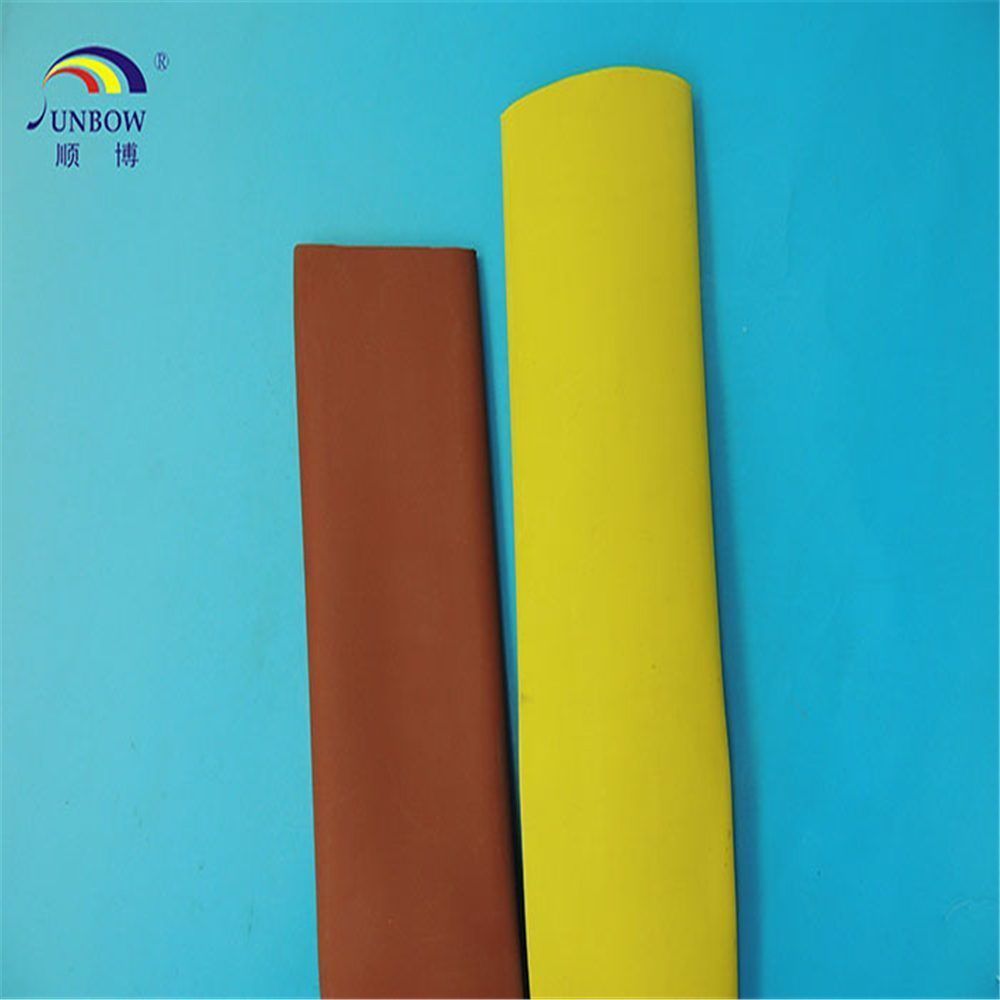
In battery electric vehicles, high-voltage cable routes must remain identifiable, flame-retardant, and mechanically stable for the full vehicle life. That is why OEMs and Tier-1 harness makers increasingly specify V0 flame retardant orange heat shrink tube as a visual and safety layer over XLPE or silicone HV cables. Compared with generic heat shrinkable tube, EV-grade orange tubing focuses on V0 flame performance, color consistency, and shrink behavior that fits dense pack packaging.
Key performance points for orange EV heat shrink
- Flame retardancy: UL VW-1 / IEC style V0 behavior to limit flame spread near modules
- High-visibility orange for service and crash-response identification
- Stable shrink ratio for connectors, splices, and sensor breakouts
- Oil, coolant mist, and abrasion resistance in under-floor and pack zones
SUNBOW SBD-SWHF-EV is engineered for new-energy vehicle cable protection. For copper bars and laminated bus structures, engineers often combine it with busbar protection heat shrink tube to keep insulation language consistent across the HV domain.
Selection checklist used by harness engineers
Start from recovered ID after shrink, wall thickness at the connector boot, and continuous temperature near the pack. Then validate color delta batch-to-batch, because orange is both branding and a safety signal. If your program needs samples for DV/PV builds, request a quote with cable OD, shrink temperature window, and flame report requirements. Browse more application cases and our technical blog for related EV insulation topics.
As 800V architectures raise clearance and creepage expectations, a qualified orange heat shrink layer is no longer cosmetic—it is part of the functional safety story for EV high-voltage cable systems.