Not every corrosive line can use PVC or silicone
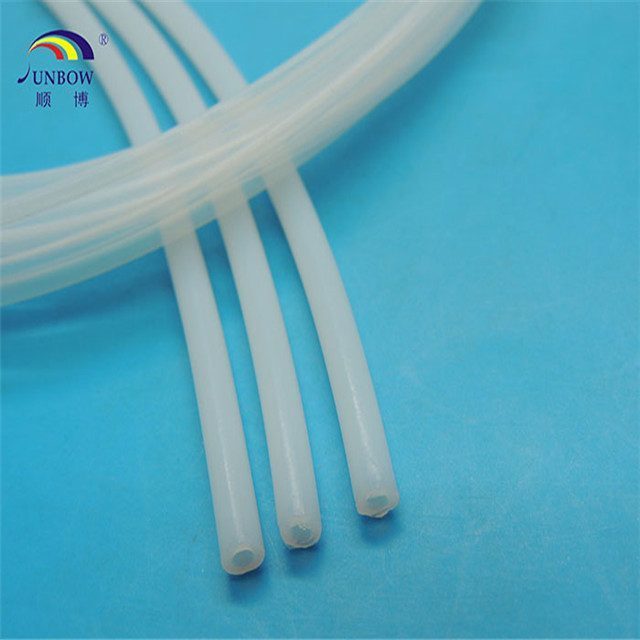
When process chemicals, aggressive cleaners, or ultra-pure fluids are involved, engineers migrate to PTFE / FEP / PFA / PVDF tube. PTFE offers outstanding chemical inertness and a wide temperature window; FEP and PFA improve clarity or melt-processability for certain assemblies; PVDF balances stiffness and chemical resistance for many industrial loops.
Practical differences that affect design
- PTFE: maximum inertness, excellent for harsh chemistries
- FEP/PFA: easier forming and clearer walls for visual flow checks
- PVDF: good mechanical strength in many chemical skids
- Heat-shrink fluoropolymer grades for tight jacket recovery
Standard extruded SBD-PTFE covers many fluid and wire sleeve needs. Where shrink recovery is required, evaluate SBD-PTFE-HST or SBD-PVDF-HST. If a lower-cost polyolefin jacket is acceptable outside the chemical zone, compare heat shrink alternatives to avoid over-specifying.
Installation and quality checkpoints
Respect minimum bend radius to prevent whitening or kinking. Use compatible fittings and avoid contamination in clean processes. For OD/ID tolerances and resin grade confirmation, request material datasheets. Choosing the right fluoropolymer tubing early prevents costly mid-project material swaps.
SUNBOW supplies fiberglass sleeving, heat shrink tubing, fluoropolymer tubes, and cable accessories for electronics, automotive, new-energy, and industrial programs. Pairing the right linked product family with early process validation shortens the path from prototype to volume and reduces insulation-related downtime. Share operating temperature, cable OD, and certification needs when you inquire for samples or datasheets.